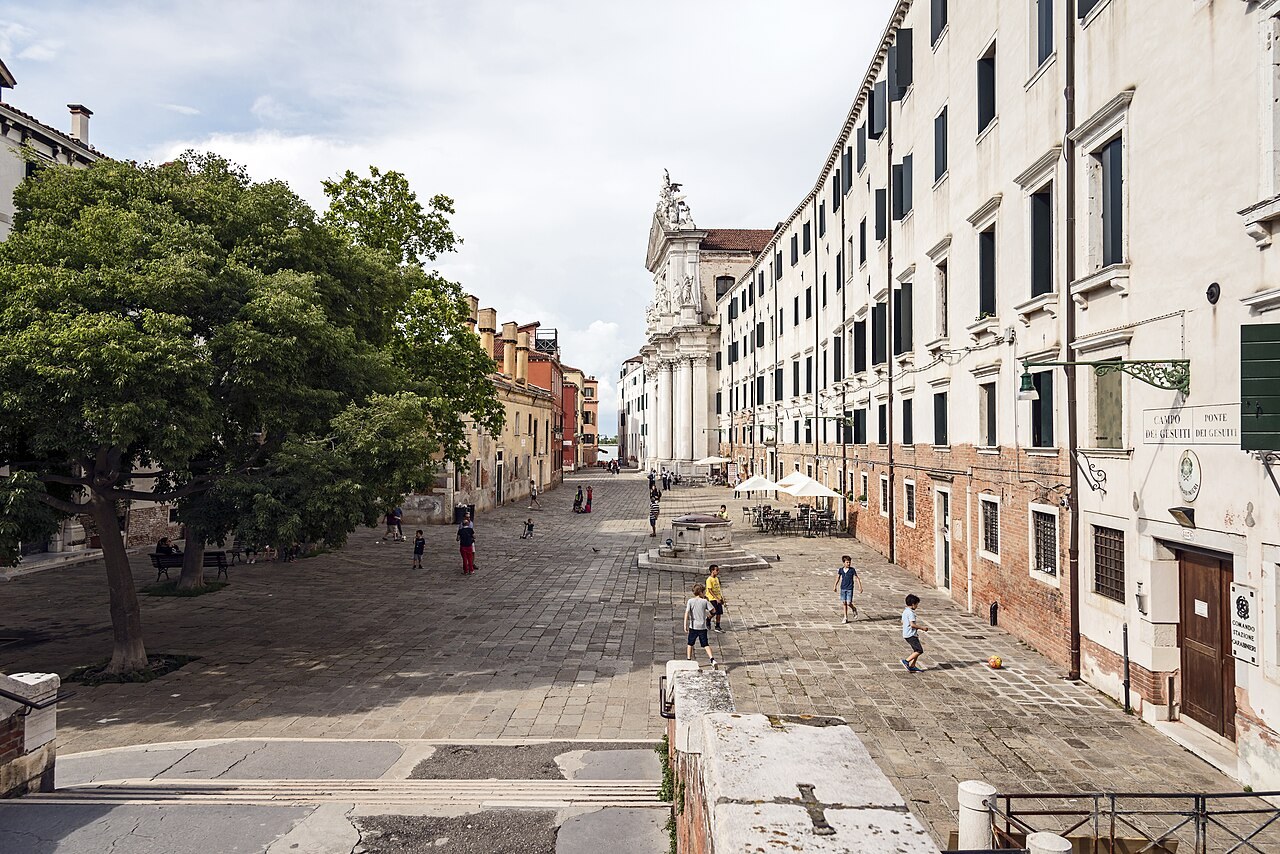
A rectangle of water and bricks in deep Cannaregio, a step from the Fondamenta Nuove: the Campo dei Gesuiti (campo means square) stretches from south to north dominated by an entire side of conventual history — the white Baroque façade of the church of Santa Maria Assunta and the bulk of the monastery running beside it. Yet the Jesuits arrived here late: the complex had been founded in the 12th century by the Crociferi, who opened a monastery, hospital and church, and still today the Oratorio dei Crociferi keeps Palma il Giovane’s masterpieces next to Palazzo Zen. Opposite, the council houses with their coloured plasters and a well on hexagonal steps bearing the engraved date 1527, which was already here when Canaletto painted the campo: one of the few places in Venice where today’s reality and the 18th-century view coincide almost perfectly.